Deals are being priced on models nobody outside the company has examined. Boards want an AI agenda nobody inside the company owns. Datatroph exists for both moments.
You're about to wire money against claims about models, moats, and data, and someone technical needs to read past the demo before it closes.
Technical due diligence and defensibility assessment of AI and machine-learning products: whether the model does what the deck says, whether the moat survives the next generation of foundation models, and whether the data advantage compounds or evaporates. The findings come back in the documents deal teams already use, which is a red flag report when you need a fast go/no-go and a full DD memo once the deal advances.
Where a claim needs testing rather than reading, Datatroph builds the evaluation harness, and it stays with you after the engagement.
Datatroph has been moving data and making it useful since 2008, across a wide range of industries. The AI work is recent and now accounts for nearly all of it, with a good deal on clinical and genetic data. Recent engagements include cancer-detection and therapy-target products, clinical scribing companies, AI products with no connection to medicine, and the buy side itself as a Venture Partner.
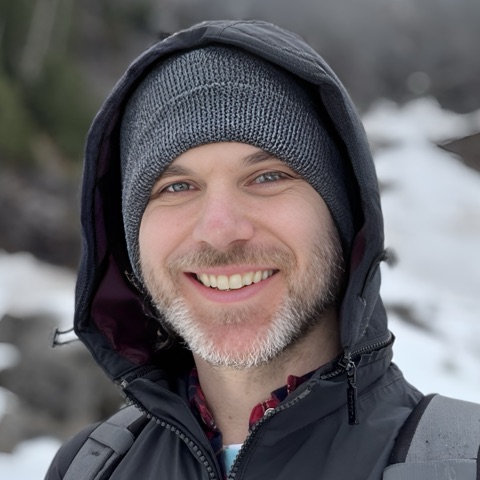
Brian Hur, who runs Datatroph, co-founded VetPronto and ran it as CEO through YC W15, and later ran the technology budget as chief information officer of a veterinary group in Australia; both roles are in the record below.
The board wants an AI story, the team is quietly worried about being replaced, and nobody owns the agenda.
This is work Datatroph has been paid to lead: listening to the business groups first; AI training built for what each team does every day; first prototypes off the ground with the CTO rather than around them; taking the one process a team repeats every day, the intake queue, the coding, the report someone writes by hand each week, and pointing the tools at that; and restructuring teams around what the tools now do, rather than leaving people to guess what it means for them.
The engagement form is a Fractional CAIO: embedded senior AI leadership on a retainer, owning the agenda without a full-time executive on the payroll, and the tooling built along the way (prototypes, evaluation tables, enablement material) outlives the engagement.
Research groups have more data than anyone has time to read, and the AI tools that could help are easy to start with and hard to defend in a methods section.
Datatroph partners with researchers to use AI inside their projects: deciding where a model can do real work, such as labelling free-text records, screening the literature, or linking clinical data to other sources, and where it would only add noise; building the pipeline alongside the research team rather than handing over a black box; and setting up the evaluation so the results hold up under peer review.
Brian Hur has done this work from the research side, from a PhD that taught language models to read veterinary clinical records for epidemiologists to more than twenty peer-reviewed papers with coauthors in veterinary medicine, epidemiology, and NLP, including a guide for veterinarians on how to evaluate AI tools.
Brian Hur has run Datatroph since 2008, usually alongside a bench of people he has worked with before. He is a veterinarian (DVM) and an NLP researcher (PhD), and the research, writing, and projects behind the practice are at brianhur.com.
He built the first version of AI Mode at VIN, a clinical assistant that uses decades of VIN's clinical knowledge, cites the source of every answer, and is used daily by practicing vets. He has published 22 peer-reviewed papers, carried a P&L as a CEO, and run a technology budget as a CIO.
Evaluating a deal: say what you can about the target, the timeline, and what's keeping you up. Leading a company into AI: describe where the team is today and where the board wants it to be. Running a research project: describe the question and the data you have.
[email protected]